Overview
SuperKart wants to forecast how much revenue each product will bring in at each store next quarter.
- SuperKart, a supermarket chain, needs accurate quarterly sales forecasts to plan inventory, staffing, and revenue targets.
- Goal: predict Product_Store_Sales_Total, the revenue a given product generates at a given outlet.
- A reliable forecast turns historical sales into a planning tool for the next quarter across all 4 stores.
- Framed as a supervised regression problem on product and store attributes.
Methodology
flowchart LR
  A[Raw Data] --> B[Clean & Encode]
  B --> C[EDA]
  C --> D[Train/Test Split]
  D --> E["Linear Regression"]
  E --> F["Tune (Cross-Validation)"]
  F --> G["Evaluate: R2 / RMSE"]
The Data
I worked with about 8,800 product-store sales records covering product details and store characteristics.
- 8,763 records across 12 columns, with no missing values and no duplicate rows.
- Numeric features: Product_Weight, Product_Allocated_Area, Product_MRP, Store_Establishment_Year, plus the sales target.
- Categorical features: Product_Sugar_Content, Product_Type (16 types), Store_Id, Store_Size, Store_Location_City_Type, Store_Type.
- Cleaned messy labels (merged 'reg' into 'Regular') and dropped the unique Product_Id identifier.
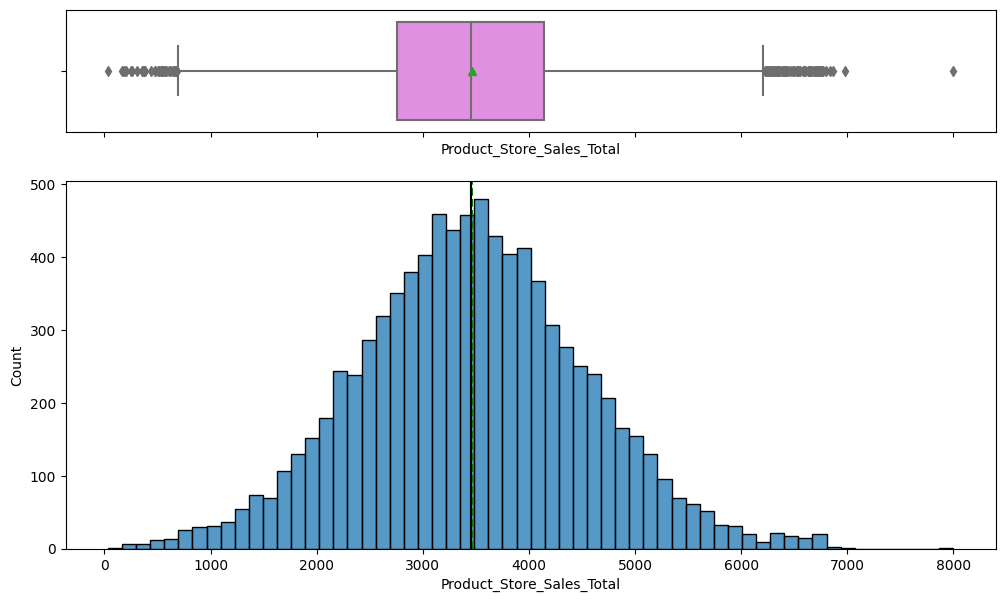
- Target sales range from 33 to ~8000, roughly normal around 3500.
Exploratory Analysis
I explored how each product and store feature relates to sales before building any model.
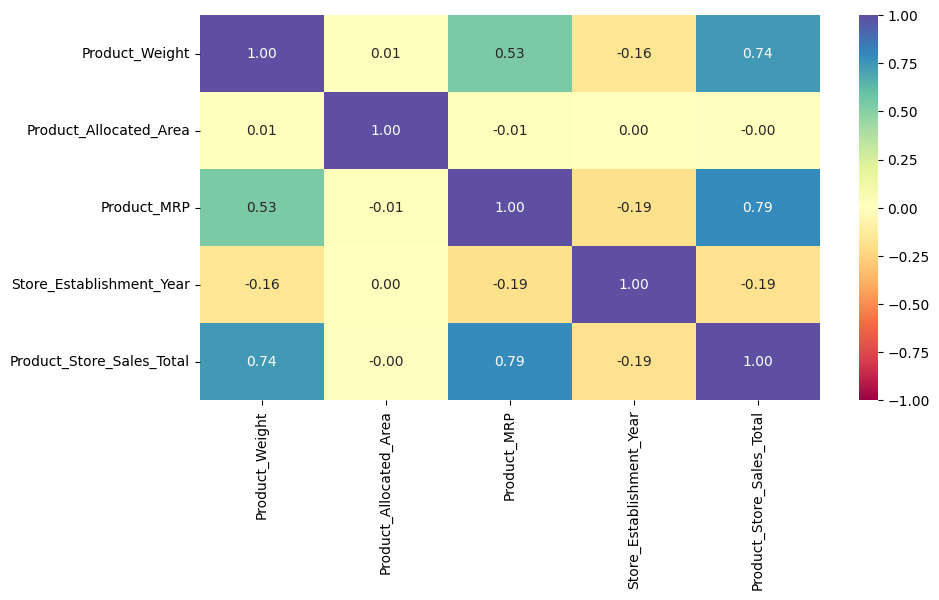
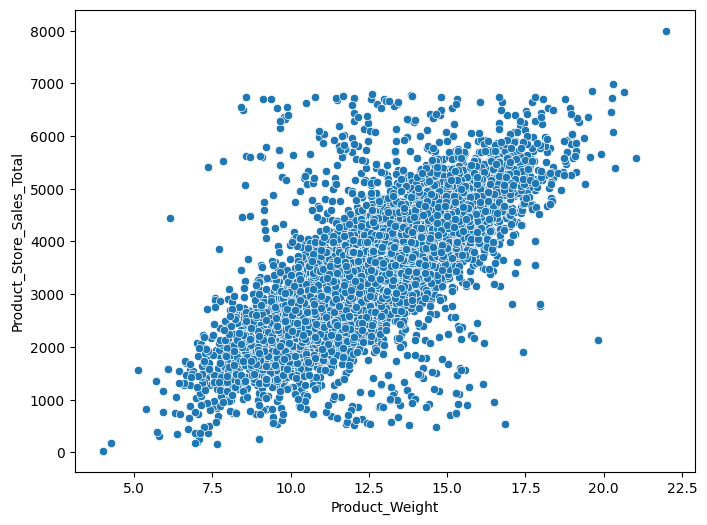
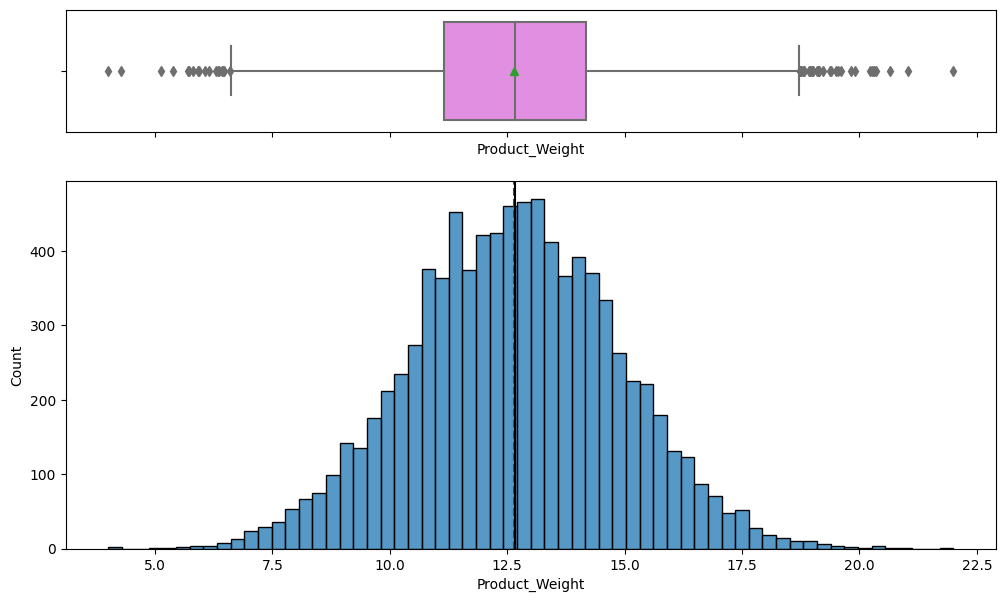
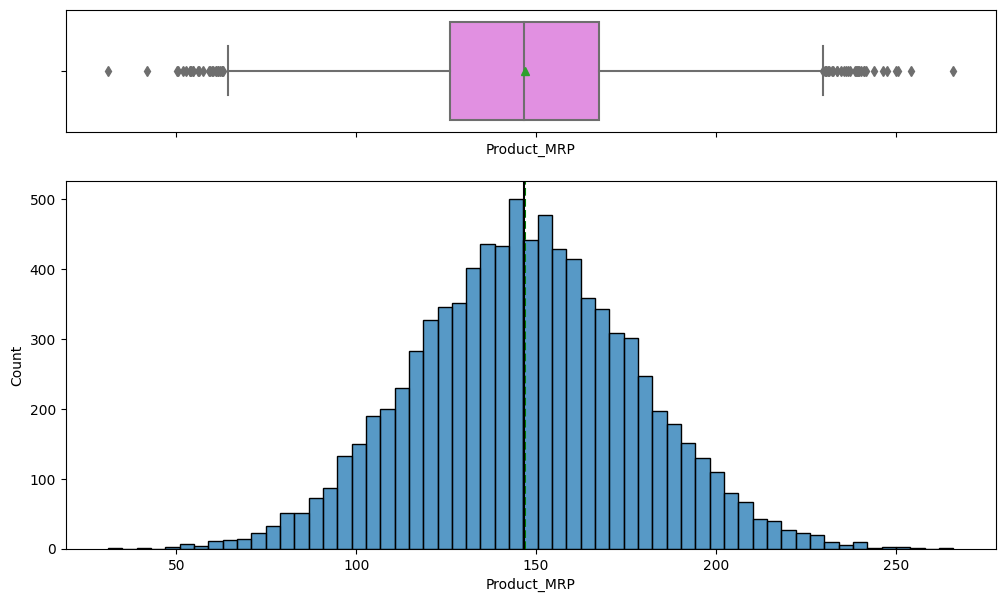
- Product_Weight and Product_MRP are the features most strongly correlated with total sales.
- Store_Establishment_Year is strongly negatively related to sales, so newer stores tend to sell more.
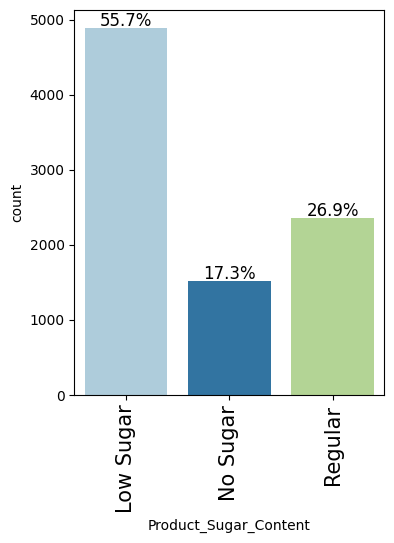
- Low-sugar products make up ~56% of items and drive the most revenue; no-sugar items contribute least.
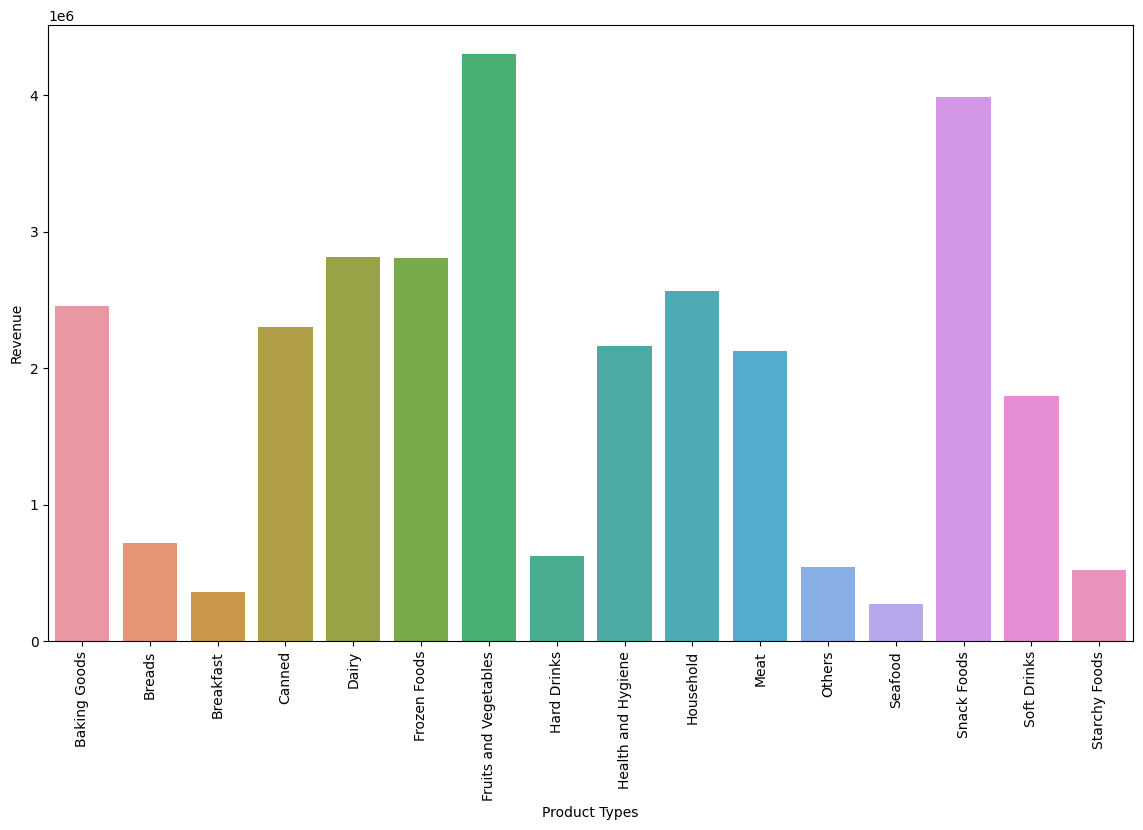
- Fruits & Vegetables (14%) and Snack Foods (13%) are the top product types; Seafood is the smallest (~1%).
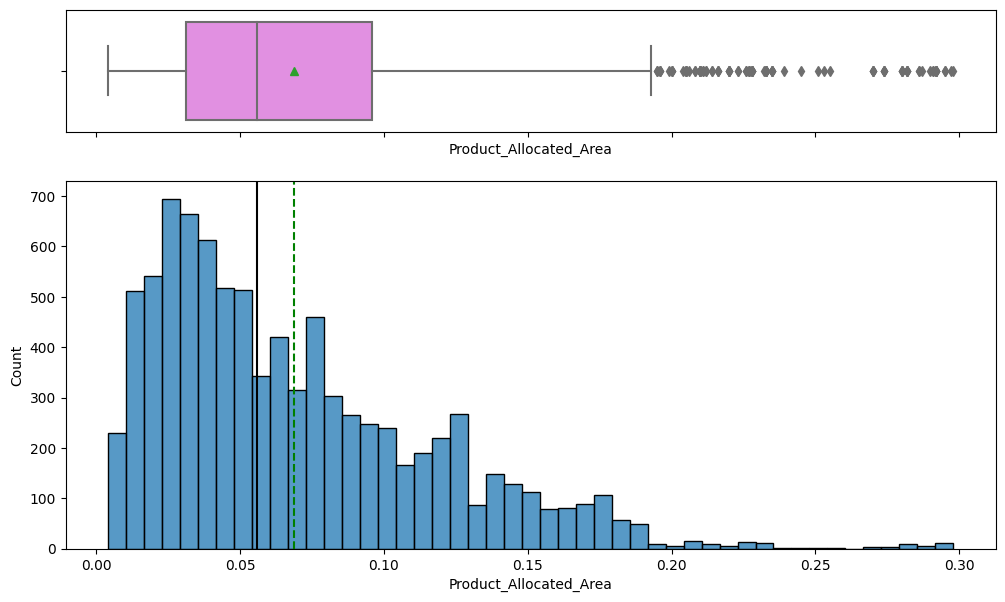
- Outliers were retained as legitimate values rather than removed.
Key Drivers of Sales
A handful of store and product traits explain most of the differences in sales.
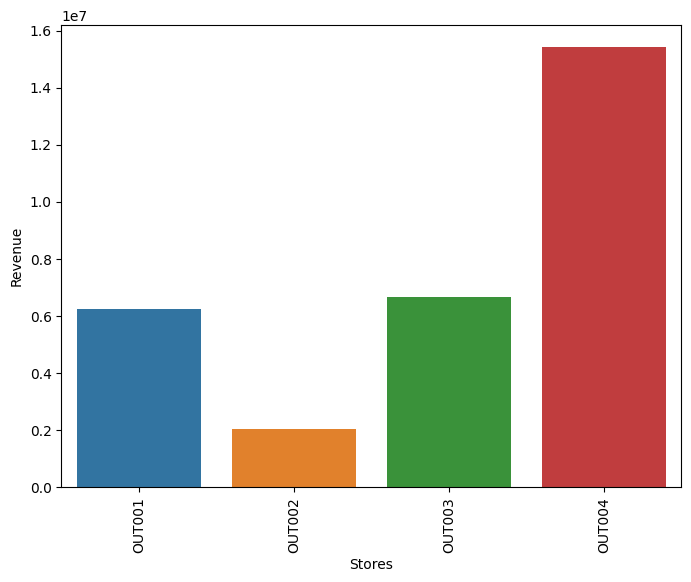
- OUT004 (Supermarket Type2, Tier 2, medium) is the top performer at ~15.4M revenue, more than double any other store.
- OUT002 (small Food Mart, Tier 3) is the weakest store at ~2.0M revenue.
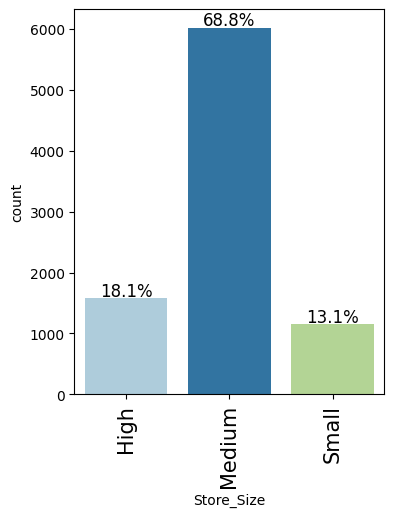
- Medium-sized stores and Tier 2 city locations contribute the bulk of company revenue.
- Product_MRP and Product_Weight are the dominant numeric drivers of per-product sales.
- Engineered Store_Age_Years and grouped 16 product types into perishable vs non-perishable.
Modeling & Results
I built a linear regression model that predicts sales accurately and passes statistical checks.
- OLS linear regression after one-hot encoding, VIF multicollinearity checks (drop features VIF >= 5), and dropping insignificant variables (p > 0.05).
- Model achieves R-squared of 0.824 (Adj. 0.823) on the full fit.
- Test performance: RMSE ~447, MAE ~267, R2 ~0.79, with train and test scores nearly identical (no overfitting).
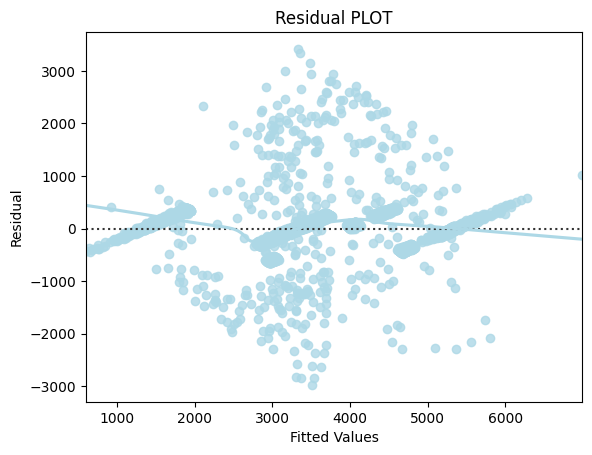
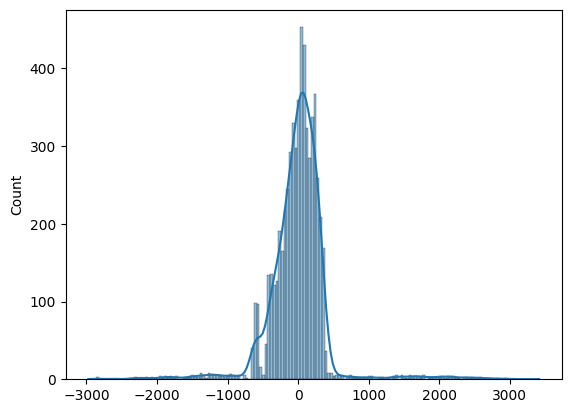
- All four regression assumptions held: zero-mean residuals, homoscedasticity, linearity, and normal errors.
- Cross-validation confirmed stable, comparable performance across folds.
Key Takeaways
The model can forecast next quarter's sales and points to where SuperKart should focus.
- The final model explains about 79% of the variation in product-store sales and is ready for quarterly forecasting.
- OUT004's Supermarket Type2 / Tier 2 / medium-size formula is the strongest blueprint for expansion.
- Boost the underperforming OUT002 and lean into Fruits & Vegetables and Snack Foods, the top revenue categories.
- Product_MRP and Product_Weight are the levers most tied to sales and should guide pricing and assortment.
- Built with: pandas, numpy, matplotlib, seaborn, scikit-learn, statsmodels, scipy
More Visualizations
Tech Stack
- pandas — data wrangling and tabular manipulation
- numpy — fast numerical arrays
- scikit-learn — modeling, pipelines, and evaluation
- seaborn — statistical visualization
- matplotlib — plotting
- statsmodels — OLS / statistical inference & VIF
- scipy — scientific computing
Attribution
This project was completed as part of the MIT Applied Data Science Program (MIT IDSS / Great Learning). The program provided the case-study scaffolding; the analysis, code, and results are my own. Published with permission, for portfolio use only.